

Novel Bioengineered Peptide May Offer a Regenerative Solution for Dentin Hypersensitivity
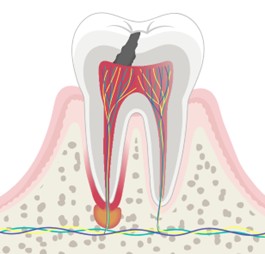
Researchers designed a novel peptide-based biomaterial TKH that has the potential for dentin remineralization.
A new biomimetic approach aims to rebuild damaged dentin and offer a more durable alternative to conventional treatments
CHINA, June 29, 2026 /EINPresswire.com/ -- Dentin hypersensitivity affects millions of people worldwide, yet existing treatments often provide only temporary relief. Seeking a more durable solution, researchers from Sichuan University developed a novel self-assembling peptide designed to mimic the functions of natural dentin proteins. By combining peptide engineering with biomimetic mineralization, the team investigated whether this innovative approach could support dentin regeneration and address the underlying structural damage associated with dentin hypersensitivity, opening new possibilities for regenerative dental care.A sharp twinge of pain while sipping a cold drink or biting into something sweet is a familiar experience for millions of people living with dentin hypersensitivity. The condition often develops when the tooth's protective outer layers are worn away by factors such as tooth erosion, abrasion, or gum recession, exposing the underlying dentin. Unlike enamel, dentin contains microscopic tubules and a collagen-rich matrix that are highly vulnerable to further damage once exposed. Dental caries accelerates this process by driving the demineralization of tooth structures and weakening dentin from within. Despite the availability of desensitizing agents and fluoride-based treatments, many current approaches provide only temporary relief. These limitations highlight the need for advanced biomimetic strategies capable of restoring dentin structure in a more durable and biologically integrated manner.
Against this backdrop, researchers from Sichuan University developed a novel self-assembling peptide called TKH to promote deep dentin remineralization and dentinal tubule repair. The researchers investigated whether this engineered peptide could simultaneously stabilize mineral precursors, regenerate collagen-associated mineral structures, and achieve long-lasting dentinal tubule occlusion for the treatment of dentin hypersensitivity. The findings were made available online in the International Journal of Oral Science on March 5, 2026.
Lead author Prof. Linglin Zhang explains, “We designed an α-hairpin peptide, TKH, by incorporating a flexible GKG linker into an antimicrobial α-helical peptide (TVH-19) to promote liquid–liquid phase separation, self-assembly, and biomimetic mineralization.” To evaluate its regenerative potential, the researchers combined computational modeling, laboratory experiments, and animal studies. They characterized the peptide's structure and self-assembly behavior, examined its interactions with collagen, hydroxyapatite, and calcium-phosphate mineral precursors, and tested its ability to remineralize demineralized dentin. Molecular dynamics simulations and a rat oral model were then used to investigate its mechanism of action, efficacy, and safety.
The study found that the GKG-modified peptide successfully adopted an α-hairpin structure and exhibited strong liquid–liquid phase separation (LLPS) and self-assembly properties, forming dynamic liquid-like condensates and nanoscale particles. TKH demonstrated a high affinity for both collagen and hydroxyapatite and effectively stabilized calcium-phosphate precursors, enabling intrafibrillar and extrafibrillar mineralization. In laboratory models of demineralized dentin, the peptide stimulated extensive hydroxyapatite formation, restored calcium and phosphorus content, and achieved deep occlusion of dentinal tubules, outperforming conventional fluoride treatment in several measures.
Animal studies further demonstrated substantial remineralization under oral conditions, with dense mineral deposition extending deep into dentinal tubules and no evidence of local or systemic toxicity. Computational analyses suggested that these effects were driven by stabilization of mineral precursors, and strong interactions with collagen and hydroxyapatite, which together supported efficient mineral regeneration.
The study highlights TKH's potential as a regenerative alternative to conventional desensitizing agents. Beyond sealing exposed tubules, the peptide promoted mineral regeneration within the collagen matrix, addressing the structural damage underlying dentin hypersensitivity. Its antibacterial activity against Streptococcus mutans may provide additional protection against caries progression, while its favorable biocompatibility supports its potential for long-term clinical use.
While further studies are needed to confirm its long-term clinical efficacy, TKH represents a promising step toward regenerative dentistry. “The peptide offers a potential strategy not only for relieving dentin hypersensitivity but also for actively rebuilding damaged dentin,” shares Prof. Zhang. Future research could explore its incorporation into desensitizing formulations, restorative materials, and preventive dental therapies, potentially shifting treatment approaches from passive repair to biologically driven regeneration.
Overall, the study demonstrates that the engineered peptide TKH can drive deep dentin remineralization and durable dentinal tubule occlusion through a biomimetic mechanism that mirrors natural tissue repair. These findings position TKH as a promising candidate for next-generation regenerative therapies targeting dentin hypersensitivity and dentin damage.
Reference
Title of original paper: Bioengineered α-Hairpin peptide TKH with GKG linker: a LLPS-mediated biomimetic mineralization system for intrafibrillar remineralization and deep dentin tubule occlusion
Journal: International Journal of Oral Science
DOI: https://doi.org/10.1038/s41368-026-00425-8
About Sichuan University
Sichuan University is a research university located in Chengdu, China, and widely recognized as one of the country’s leading higher education institutions. It was formed through the merger of several historic universities, including the former West China University of Medical Sciences, giving it a strong foundation in medical and health sciences. The university offers a broad range of disciplines across medicine, engineering, natural sciences, humanities, and social sciences. Its West China medical campuses, particularly the West China Hospital of Stomatology, are internationally recognized for dental and biomedical research. Sichuan University is part of China’s elite “Double First-Class” initiative.
Website: https://en.scu.edu.cn/
About Prof. Linglin Zhang from Sichuan University
Prof. Linglin Zhang is a researcher affiliated with the West China Hospital of Stomatology, Sichuan University, China. With a background in dentistry and medical research, she works on interdisciplinary topics in biomaterials, endodontics, and dentin–pulp complex regeneration. She has co-authored several peer-reviewed publications in oral science and dental materials. Her research focuses on peptide-based biomaterials, dentin remineralization, and minimally invasive approaches for dental tissue repair. She contributes to the development of biomaterial-based strategies for regenerative dentistry, integrating oral biology with advanced material science.
Funding information
The design of the study, the collection, analysis, and interpretation of data; and the
writing of the manuscript were supported by the National Natural Science Foundation
of China (No. 82370951 to L.L.Z; No. 82501137 to S.L.H) and the Sichuan Science and
Technology Program (No. 2023ZYD0105 to L.L.Z, No. 2026YFHZ0051 to S.L.H).
Yini Bao
International Journal of Oral Science
+862885546461 ext.
email us here
Legal Disclaimer:
EIN Presswire provides this news content "as is" without warranty of any kind. We do not accept any responsibility or liability for the accuracy, content, images, videos, licenses, completeness, legality, or reliability of the information contained in this article. If you have any complaints or copyright issues related to this article, kindly contact the author above.
