

Prevention Starts Before Diagnosis: Why Early Empowerment Is the Missing Link in Breast Cancer in Young Women
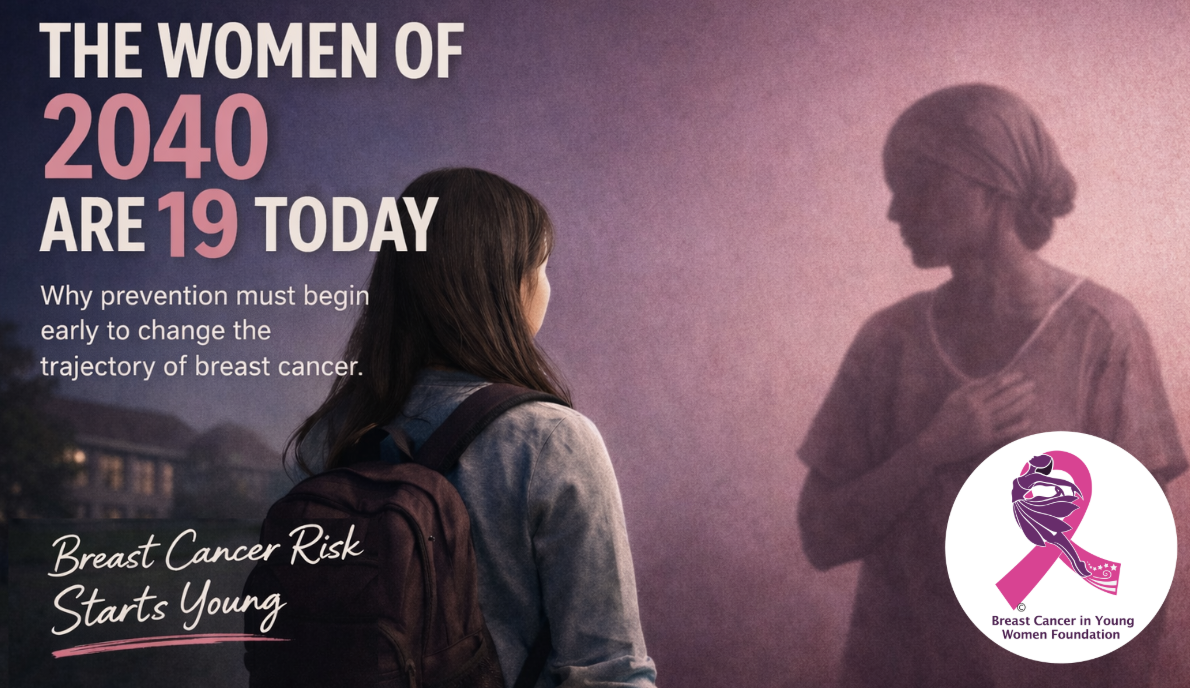
Breast Cancer Risk Starts Young - Empowerment Must Begin Early to Change BCYW.
BCYW Can't Be Fully Addressed Without Involving Young Adults Themselves.
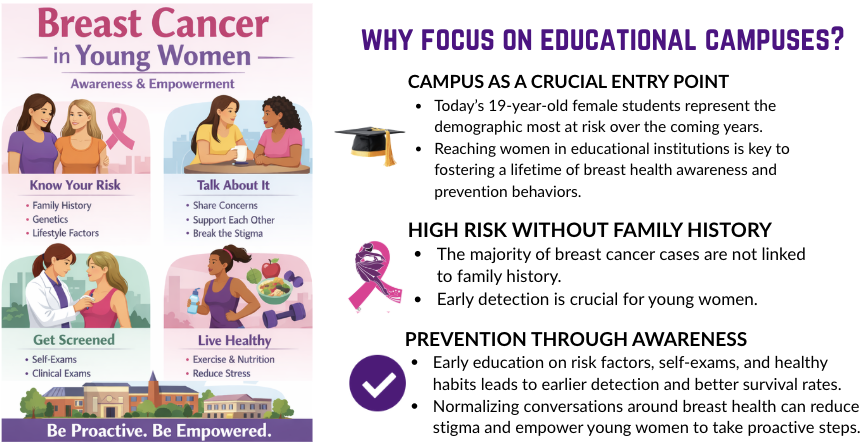
Why Focus on Educational Campuses?
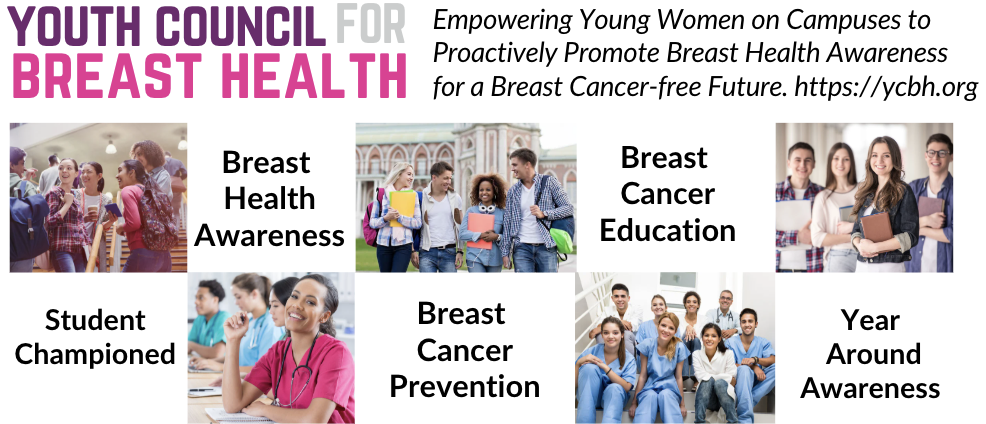
Youth Council For Breast Health.
Campus-based engagement offers a powerful, underutilized pathway to normalize early detection, challenge myths, and build lifelong health behaviors.
DENVER, CO, UNITED STATES, March 31, 2026 /EINPresswire.com/ -- The Breast Cancer in Young Women Foundation (BCYW Foundation) recently shared a powerful new perspective highlighting an urgent and often overlooked fact: women under 39 who are likely to be diagnosed with breast cancer in 2040 are about 19 years old today. These observations underscore the need to focus awareness, prevention, and engagement much earlier in life.Traditionally perceived as a disease affecting older women, breast cancer is increasingly being diagnosed in younger populations worldwide. Young women under 40 not only make up a growing share of new cases but also often face more aggressive forms of the disease. The 2022 WHO global estimates indicate that about 10% of breast cancer cases occur in women under 39, with higher proportions in certain regions. Projections suggest this burden will continue to increase through 2040.
“This might be a pivotal moment—it suggests a shift in our perspective,” said Rakesh Kumar, PhD. “If risk begins building during adolescence as widely believed, then prevention, awareness, and education must also start during adolescence - and it must be relevant to where young women are today.”
A SHIFT IN UNDERSTANDING RISK
Emerging evidence indicates that breast cancer risk develops over many years, often long before it is clinically detected. While hereditary cases make up about 8-15% of cases, most breast cancers in young women result from complex interactions among genetic, hormonal, environmental, and lifestyle factors. Changes in reproductive patterns, rising metabolic risks, and lifestyle behaviors like alcohol consumption are all contributing to this evolving landscape.
Notably, cellular changes associated with breast cancer have been seen even in healthy young breast tissue, emphasizing that adolescence and early adulthood are key periods for intervention.
THE AWARENESS GAP—AND ITS CONSEQUENCES
Despite rising early-onset trends, awareness among young women remains limited. Many do not recognize early warning signs, underestimate their susceptibility, or delay seeking care. Compounding this challenge, traditional health systems and screening frameworks are not designed for younger populations, contributing to later-stage diagnoses.
Closing this gap requires reframing breast health as a priority for women's wellbeing.
A PREVENTIVE WINDOW WE CANNOT AFFORD TO MISS
The BCYW Foundation highlights that adolescence and early adulthood provide a powerful opportunity to influence long-term breast health outcomes. Early education on breast health awareness, understanding family history and genetic risks, and adopting healthy lifestyle habits can greatly affect future risk patterns.
“Young women are not just future patients—they are today’s opportunity for prevention,” added Dr. Kumar.
CAMPUSES AS AN EXAMPLE: THE UNTAPPED ENGINE OF PREVENTION
The BCYW Foundation emphasizes higher education institutions as some of the most powerful—and underused—platforms for breast cancer prevention.
With millions of young women attending colleges and universities worldwide, campuses provide a unique environment to:
• Incorporate breast health awareness into daily life
• Promote sustainable, healthy habits early
• Develop peer-led education models that grow organically
• Create ripple effects that extend into families and communities
Peer-to-peer engagement, in particular, has been shown to be one of the most effective ways to normalize conversations, reduce stigma, and speed up behavior change.
TOWARDS REDEFINING PREVENTION: YOUTH AS PARTNERS
The BCYW Foundation highlights a shift in approach: young people should be seen not just as passive recipients, but as active partners in prevention. Engaging them early can:
• Introduce breast health literacy during formative years
• Encourage future research and innovation
• Build a generation of informed advocates who influence health policy and behavior
Early intervention offers a rare opportunity to influence long-term outcomes on a broad scale
YOUTH AS CATALYSTS
Today’s generation is the most connected in history. Equipped with knowledge and purpose, young people can extend awareness far beyond traditional campaigns—through social networks, campus communities, and grassroots initiatives.
Importantly, youth are not just recipients of health messages—they are influential advocates. They affect household decisions, promote screening among older family members, and help change cultural perceptions around breast health.
Recognizing this, the BCYW Foundation has made youth engagement a key part of its prevention strategy.
A SCALABLE MODEL: THE YOUTH COUNCIL FOR BREAST HEALTH (YCBH)
To operationalize this vision, the BCYW Foundation started the Youth Council for Breast Health (YCBH)—a global campus-based program that encourages students to lead breast health awareness efforts within their schools and communities. Through YCBH chapters, young adults gain:
• Evidence-based knowledge and resources
• Opportunities for peer education and leadership
• Global collaboration across campuses
• Platforms to promote preventive health behaviors throughout the year
This approach goes beyond awareness campaigns, integrating breast health into everyday life and building a sustainable, youth-led prevention system.
LOOKING TOWARD 2040: Without early and targeted interventions, a large portion of the projected global breast cancer burden in 2040 will affect today’s adolescents and young adults. However, this path is not set in stone. Investing in youth-focused awareness, encouraging risk-reducing behaviors, advancing research into early-life factors, and promoting engagement through colleges and universities offer a real opportunity to change the disease's future trajectory.
WHY THIS MATTERS NOW: The generation most likely to face breast cancer in 2040 is already here, present on campuses, and in early careers today. Reaching them now—before risk turns into disease—may be one of the most effective ways to lessen the future impact of breast cancer.
A THOUGHT TO CARRY: Women who will be diagnosed with breast cancer in 2040 are about 19 years old today. Prevention must begin early—because the future of breast health is being shaped right now.
FOR MORE DETAILS, READ
Part 1: https://lnkd.in/gfpvaFNe
Part 2: https://lnkd.in/g5fDvmFE
ABOUT THE BCYW FOUNDATION
The BCYW Foundation is a global organization dedicated solely to breast cancer in young women. Founded three years ago, it brings together a diverse network of scientists, oncologists, surgeons, survivors, NGOs, and partners from 30 countries. The BCYW Foundation is a global organization dedicated to advancing research, raising awareness, and providing support to young women affected by breast cancer. Through partnerships and advocacy, the foundation is committed to creating a future where no young woman feels overlooked in her fight against this disease. The BCYW Foundation relies on individual contributions and sponsors to raise the funds necessary to support its mission. Donate to the BCYW Foundation: Every contribution – big or small – helps the BCYW Foundation fulfill its mission to save the lives of young women from breast cancer in the years to come. Thank you for your generosity.
Rakesh Kumar, Ph.D., Founder and CEO
Breast Cancer in Young Women Foundation
bcywf@breastcancerinyoungwomen.org
Visit us on social media:
LinkedIn
Bluesky
Instagram
Facebook
YouTube
X
Legal Disclaimer:
EIN Presswire provides this news content "as is" without warranty of any kind. We do not accept any responsibility or liability for the accuracy, content, images, videos, licenses, completeness, legality, or reliability of the information contained in this article. If you have any complaints or copyright issues related to this article, kindly contact the author above.
