

SPORTS HEAVEN: THE BIRTH OF ESPN PUTS BILL RASMUSSEN, THE INTENTIONAL OPTIMIST, BACK AT THE CENTER OF A REVOLUTION

Watch this documentary describing the miraculous beginnings of ESPN.

Bill Rasmussen, founder of ESPN, is the intentional optimist whose vision helped transform sports media and reshape American sports culture.
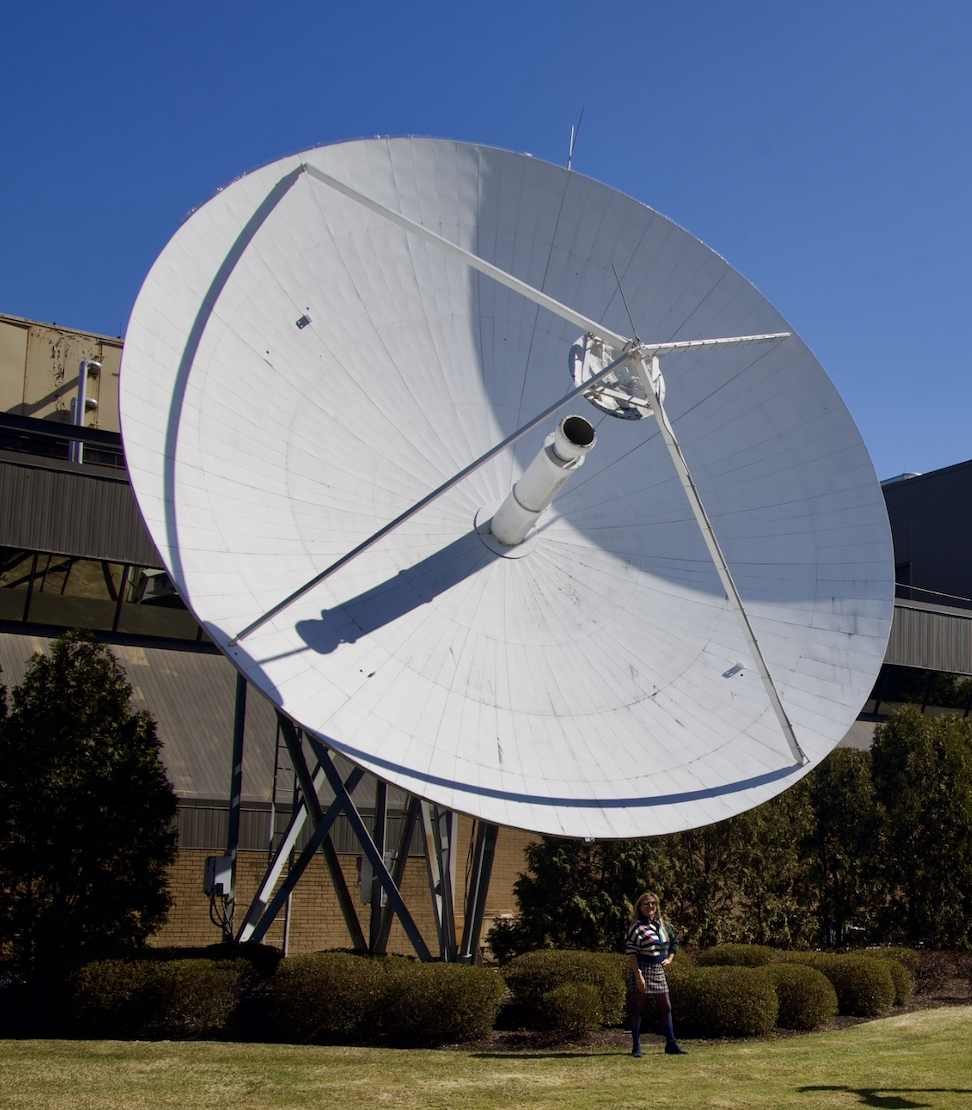
The original satellite dish purchased for ESPN by Bill Rasmussen, the piece of technology that helped turn an unlikely idea into the first 24 hour sports network and changed the future of sports media. I am standing beneath it to give you a sense of size.
New ESPN documentary premieres April 6. Companion audiobook arrives April 7.
That idea belonged to Bill Rasmussen.
This April, Rasmussen’s extraordinary story steps back into the spotlight with Sports Heaven: The Birth of ESPN, a new ESPN documentary premiering April 6 at 8:30 p.m. Eastern, followed by the release of the companion audiobook on April 7. Together, they revisit the unlikely rise of the man whose vision helped transform sports from scheduled entertainment into a permanent part of American culture.
Today, sports are not merely watched. They are lived in real time. Fans wake to highlights, argue over rankings at lunch, stream games at dinner, and drift off with scores still scrolling across screens. That rhythm now feels so familiar it is easy to forget someone had to imagine it first.
Rasmussen did.
He is, in many ways, the intentional optimist. When others saw instability, he saw possibility. When others saw limitations, he saw space for invention. When life handed him a professional setback, he refused to call it an ending.
“Sports are now a $417 billion juggernaut, and ESPN’s maturation has a lot to do with that,” says Dr. John James Nicoletti, former sports producer and Arizona State University professor of practice. “Multi-million-dollar player salaries, billion-dollar expansion team valuations, major streaming networks vying for broadcast rights, and even high school NIL payments all trace back to Bill’s legacy and ESPN’s origins.”
The world Rasmussen entered in the late 1970s looked nothing like the one sports fans inhabit now. National coverage was sparse. Highlights arrived late. Entire leagues lived on the margins of public attention. Even marquee events could be delayed, rationed, or ignored. Sports did not yet flow continuously through the bloodstream of the culture.
“Not long ago, we waited until Monday Night Football for NFL highlights from other markets,” says Steve Patterson, president of Pro Sports Consulting. “You got one NHL, NBA or MLB game per weekend at best. The NBA Finals were on tape delay on CBS. Olympics and extreme sports were rare on ABC’s Wide World of Sports. ESPN made them ubiquitous. Exposure, viewership, sponsorship and valuations skyrocketed, all largely due to ESPN.”
What happened next has the shape of American mythology. A man loses a job. A door closes. The future opens.
In 1978, Rasmussen was fired from the Hartford Whalers. For many people, that would have been the end of a chapter. For Rasmussen, it became the beginning of an audacious new one. Instead of retreating, the intentional optimist asked a question that would alter sports history: Why not build a channel dedicated entirely to sports?
The pitch sounded risky because it was risky. Cable television was still young. Money was uncertain. Broadcast power was concentrated in the hands of traditional networks. The infrastructure barely existed. Belief was scarce. Yet Rasmussen saw something others missed. Fans did not only want games. They wanted connection, continuity, access, narrative. They wanted sports to remain in reach.
“Some ideas are big enough to change the world,” says sports journalist Dan Bickley. “Bill Rasmussen is a pioneer who changed sports forever. ESPN shaped modern sports culture by introducing continuous 24/7 coverage, increasing game accessibility, turning TV anchors into sporting icons and influencing athlete behavior.”
The early years in Bristol, Connecticut, were not sleek or polished. They were fragile, improvised, and full of nerve. Staffers scrambled for programming. Deals had to be made. Technology had to be trusted. One satellite dish became a symbol of both the risk and the faith required to move forward. Every advance carried the possibility of collapse. Every success felt borrowed from the impossible.
George Grande, who anchored the first SportsCenter on September 7, 1979, still remembers the uncertainty hanging over those opening moments. ESPN’s official film description traces the story back to Bill and Scott Rasmussen and their early partners as they fought to build the world’s first 24 hour sports network.
“We didn’t know whether we were gonna last four weeks, four years, let alone 40 plus years,” Grande says. “But we knew we’d be part of something very special.”
Mike Soltys, who joined ESPN as an intern in 1980 and served as one of ESPN’s key public relations leaders for more than 40 years, played an important role in pulling the documentary together, helping connect the people, history, and perspective behind ESPN’s origin story.
That impact now reaches far beyond television. ESPN changed economics, culture, media power, athlete visibility, and the way fans understand time itself. Sports were once events people gathered around. Now they are an environment people live inside.
That is the story at the heart of Sports Heaven: The Birth of ESPN.
The companion audiobook, published by Hachette Audio, is credited to Bill Rasmussen, Mike Soltys, and Garrett Sutton, with a foreword by Chris Berman.
It is not simply the story of a network. It is the story of persistence, risk, vision, and intentional optimism. Bill Rasmussen did not see a professional blow as the end of the story. He saw it as an opening, and that choice helped remake an industry.
Before ESPN, sports came to America in fragments.
After Bill Rasmussen, they never left.
By Penni Leigh Graham, Indepentant Culture and Sports Writer
Penni Leigh Graham
Penni Leigh Graham
+1 480-257-6008
email us here
Visit us on social media:
LinkedIn
Instagram
Facebook
YouTube
TikTok
Legal Disclaimer:
EIN Presswire provides this news content "as is" without warranty of any kind. We do not accept any responsibility or liability for the accuracy, content, images, videos, licenses, completeness, legality, or reliability of the information contained in this article. If you have any complaints or copyright issues related to this article, kindly contact the author above.
